

How a Grammar School Chemistry Lesson Sparks Critical Thinking
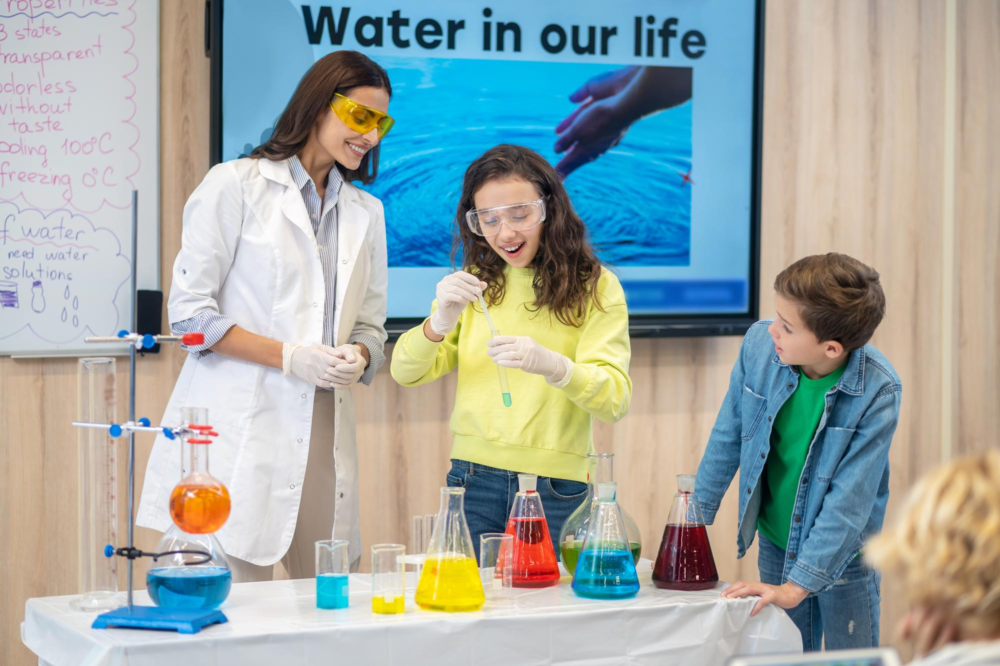 Young children are naturally full of questions about the world around them. They want to know why water freezes into ice, why soap bubbles float, and why leaves change color in the fall. Starting early with a simple Grammar School Chemistry Lesson is a wonderful way to turn that natural curiosity into strong thinking skills. When we show young minds how nature works using clear pictures instead of long lists of hard words, we help them see the rules of our world. This friendly approach makes science feel less like a scary chore and more like an exciting puzzle waiting to be solved.
Many parents wonder if young kids are truly ready to learn chemistry. The answer is a big yes, as long as we change how we teach it. Children do not struggle with the actual ideas of science; they get stuck on the heavy blocks of text found in old-school schoolbooks. When we take away those scary words and replace them with bright, picture-based steps, young learners can easily see how tiny parts fit together. This builds an early confidence that helps them succeed in every other school subject.
Table of Contents
- The Joy of Finding Answers Early
- Looking Beyond the Surface
- Connecting Math and Science with Pictures
- Easy Ways to Build a Scientist at Home
- Common Questions from Parents
- Our Goal for Your Family
The Joy of Finding Answers Early
Kids are born to be little scientists. They drop toys to see how they fall, mix colors in their water cups, and watch puddles dry up in the hot sun. A good science plan does not need to teach kids how to be curious. Instead, it just needs to give them a clear path to organize their thoughts. By showing them the hidden rules behind what they see every day, we teach them how to think through problems step by step.
Have you ever seen a child’s face light up when an idea finally clicks? That happy moment is where real learning happens. By focusing on the clear logic of how things mix and change, we walk away from boring memorization. This encourages kids to ask better questions and find their own smart answers, which is the heart of true problem-solving.
Looking Beyond the Surface
Traditional science classes for young kids often stop at simple descriptions. Kids watch a plant grow or see a baking soda volcano fizz up, but they rarely find out the real reasons why those things happen. While watching a fizzing reaction is a lot of fun, stopping the lesson there treats science like a simple magic trick.
We can easily take the learning a step further by showing students the tiny parts that cause the action. When children use their own eyes to watch clear, moving pictures of particles bumping into each other, they learn to look deeper at the world. They stop just seeing what happens and start figuring out why it happens. This simple habit is exactly how we turn everyday observation into great thinking skills.
Connecting Math and Science with Pictures
Science and math always go hand in hand, even for young kids. If a child feels nervous about numbers, they will often feel nervous about science too. Bringing a friendly Grammar School Math Course into the mix alongside visual science lessons ensures that both sides of the brain grow together in perfect balance. When we teach math using clear graphs, shapes, and pictures instead of tricky rules, the logic becomes easy to see.
“Math and science are not two separate chores on a school day. They are the two lenses we use to look at, measure, and enjoy the beautiful patterns of our natural world.”
When numbers are tied to real objects, like counting tiny particles or tracking temperatures on a colorful chart, math stops feeling like a scary test. It turns into a helpful tool that lets young scientists tell the story of their own discoveries. This combined style builds a strong setup that stops math anxiety before it ever gets a chance to start.
Easy Ways to Build a Scientist at Home
You do not need a fancy laboratory or expensive tools to build a scientific mind at home. In fact, some of the very best lessons happen right at the kitchen counter or out in the yard on a sunny afternoon.
- Ask Open Questions: When your child notices a change in nature, ask them what they think is happening underneath rather than just giving a quick answer.
- Encourage Playful Guesses: Let your learner guess what will happen before you mix different ingredients together while making dinner.
- Use Easy Comparisons: Match tiny scientific behaviors to familiar things, like comparing a strong bond to two friends holding hands tightly on the playground.
- Celebrate Mistakes: Treat a failed home project as a neat piece of information that helps you both figure out a better path forward together.
Common Questions from Parents
- Can my child learn chemistry if they are still learning basic multiplication?
Yes! Basic chemistry is really about shapes, fits, and patterns, not long math equations. When we use simple drawings to show how pieces lock together, kids get it right away. The advanced math skills can easily grow alongside the science over time.
- My child gets tired of long reading tasks. Will this approach help them?
Absolutely. Our entire program completely skips the heavy textbook style. We focus on clear videos that explain things out loud while showing bright, step-by-step pictures. This takes away the reading roadblock so kids can focus on the fun logic.
- How does learning about atoms help my child with regular subjects?
It trains their brain to look for hidden patterns in everything they study. Whether they are looking at how a sentence is built in reading class or tracking timelines in history, they are using the exact same step-by-step logic.
- Is this course a good fit for parents who do not know much about science?
It is perfect for parents who feel nervous about science. The lessons are completely ready to use and act like a friendly, expert tutor right in your home. You do not need to prepare talk notes or grade hard worksheets.
- What is the best age to start showing these visual science ideas to kids?
The exact moment your child starts asking why things change in nature is the perfect time to begin. Usually, kids in early grammar school have the perfect mix of curiosity and visual skills to love this style of learning.
Our Goal for Your Family
At Fascinating Education, we believe that every single child can understand the rules of nature when they have the right tools. We know that old-school schoolbooks often build walls of frustration around beautiful subjects like chemistry and biology. By blending the facts of brain science with clear, friendly animations, we work hard to make big ideas fully open to young minds. We invite you to try our free introductory visual lessons to see how quickly learning stress can turn into pure joy. Together, we can change the way our children see the world, building a bridge of confidence that helps them through their whole school journey.